Tuesday, February 28, 2017

Paper #2-Rhetorical Analysis-Revised

Jose Mejia

Ms. Reyes

English 1302-65R

2-28-2017

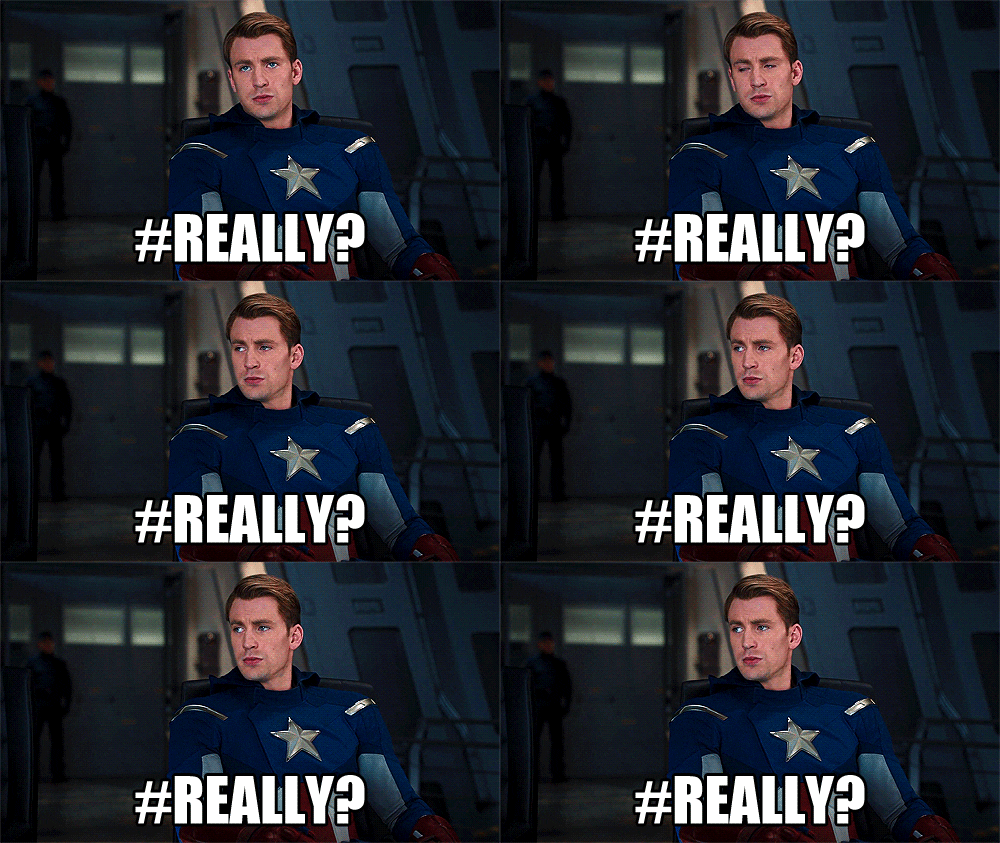
Chris Evans's, "Captain America" tweet displays in an attempt through false authority appeal with Ethos to construct an identity which in this fallacy contradicts post.  Whether it’s with a “tweet”, the notorious “hashtag” or even a spontaneous picture upload, Twitter has found many ways to let people all over the world express their stories. Thousands, and even millions of posts are posted and passed along through twitter implementing opinions of all kind. All posts mainly are made or composed of national or even global situations that are happening. One’s opinion can be another’s total opposing reason on what they believe is right or wrong on certain dilemmas.
 Once the app begins to gain an immense amount of tweets regarding certain subjects, a trend is officially instituted within the app itself. Celebrities, athletes, politicians and iconic figures have the greatest influences on the app being able to connect their posts, to the public audience. This matter is an extremely important rhetorical connection because of the words in which the iconic figures use in their posts.In Ramage, Bean, and Johnson’s, “Writing Arguments: A Rhetoric with Readings,” the authors mention something known as the ‘Rhetorical Triangle’ in page 55 of the book. This template or structure characterized key points such as the audience, message and the writer or speaker. To get into further knowledge of what the authors meant by this, they mentioned the persuasive appeals of Pathos, Logos and Ethos. Each appeal is related, but generally distinctive as well. I’ve chosen Ethos to represent the actual representation of the post made by a notorious celebrity. Chris Evans, better known as, “Captain America” is a constant user of Twitter. His posts throughout the last year have received all sorts of feedback and even backlash by the media and public users of the self-platform.
Mr. Evans mentions in this post I chose to portray my information saying, “Obviously we must prioritize keeping Americans safe. But we mustn’t become un-American in the process.” Evans was a huge follower of Hilary Clinton in this past Presidential race which in terms, made him greatly dislike the opposing candidate, Donald Trump. This post was uploaded after Mr. Trump was inaugurated as the 45th President of the United States. Therefore, Evans is responding in his own rhetorical opinion on one of these suppose actions that will be applied by the President, in his first 100 days in office. Ethos is greatly being portrayed in this post made by Evans, due to his major political overview in past remarks. In the book, “Writing Arguments: A Rhetoric with Readings,” the author mentions in page 55, “Ethos is also a function of the writer’s reputation for honesty and expertise independent by the message.”  This post mentioned backs up on how it is that Evans appealed with his persuasive opinion.
The audience, in respective to this matter, is intended to every single American. Regardless if they are or aren’t a follower of "Steve Rogers" beliefs and his actions, Evans is trying to create a powerful opinion in saying that the protection of every single American is a priority. However, the actions Mr. Trump is doing mainly involving immigration, has become the un-American way of fixing the country. I mention this because it’s strictly what Chris Evans is trying to wrap around to the U.S. public. Trump is trying to send as many illegal immigrants back to their respective countries in order to make a “better” and “safe” America. Evans mentions, “We mustn’t become un-American in the process,” by saying this he expresses how doing this sort of injustice isn’t the true American way in solving civil problems. Logos is greatly being used in this concept. Chris Evans not only portrays Captain America himself, but also plays the actor known as "Steve Rogers" who in concept is a very credible and understandable figure within The Avengers movies. This fallacy of "Rogers" and the actual persona who plays him in Chris Evans contradicts the actual reality of what's being mentioned in the post. 
This post although repeating some words and being short, stated more than one can actually realize. Evans made his statement clear and sparked a great argument on such a self-narrative platform. To enhance more into perspective, the rhetorical analysis from this comment goes to show a very profound way of getting a solemn opinion across on such a delicate issue. This specific piece compared to other arguments isn’t as complex as others, but Evans saw that you don’t have to be complex to get such a self-persuasive “American” rhetoric opinion across.
(Include Kairos, Brief Summart of Post, Thesis Paragraph, Analysis, Conclusion) 

Image result for chris evans on micImage result for captain america gif

Ramage, John D., John C. Bean, and June Johnson. Writing Arguments: A Rhetoric with Readings. Boston: Pearson, 2016. Print. 


Reflection #4

After receiving feedback from my peer, I’ve learned the strongest part of my writing was my proper introduction. Giving a brief summary of my platform and the affordances  provided by my platform further made my introduction and the beginning of my essay easy to comprehend. The post in which I chose to mention that was a part of my self-writing platform was, according to my peer, well analyzed and explained. Mentioning Chris Evans’s support of Hilary Clinton in the past presidential election backs up the support of what Mr. Evans posted about staying, “American”. In order for my essay to be more fluid and profound, my peer suggested to connect such of my ideas in a better format. I learned that I wrote my essay too much like as if I’m directly answering the provided material for the assignment. I have the information as to what this essay pertains to, but in order to sound proper, I must use a certain point of transition phrases and ideas to sound credible. 

Friday, February 24, 2017

Quiz #3- Chapter 8

Both passages gave valuable point regarding both logos and pathos. Passage number one included a profound persuasive way of logos that added a lot of credibility on to what it was specifically talking about. The author mentions in passage number one, “In the New Testament the word used for this type of time is kairos.” By stating this, the author is informing the reader of a factual word which means “right or opportune moment”. This word is contrasted with the word chronos which basically means something put in chronological time. Logos is greatly being used in this passage as well as Pathos because the author is appealing to our emotions by questioning whether we’re “willing” to change the way of our climate or not. Passage number two also uses an immense amount of credibility and I’m choosing this passage as the one which was most persuasive to me personally. The author incorporated a huge amount of pathos appeal. In the reading, it mentions a way on how to change the way of taking care of Global Warming and how in terms, we can gain positive outcomes in helping the environment. The author mentions in passage number two about “bold shifts” to create “hundreds and thousands of new jobs.” Not only would the environment be saved, it would add lots of money to our capital investment as well. The way the appeal of both Pathos and Logos incorporated leaned me towards passage two as being the most persuasive. 

Monday, February 20, 2017

Paper #2 Rhetorical Analysis- Rough Draft

Jose Mejia

Ms. Reyes

English 1302-65R

2-20-2017

Whether it’s with a “tweet”, the notorious “hashtag” or even a spontaneous picture upload, Twitter has found many ways to let people all over the world express their stories. Thousands, and even millions of posts are posted and passed along through twitter implementing opinions of all kind. All posts mainly are made or composed of national or even global situations that are happening. One’s opinion can be another’s total opposing reason on what they believe is right or wrong on certain dilemmas. Once the app begins to gain an immense amount of tweets regarding certain subjects, a trend is officially instituted within the app itself. Celebrities, athletes, politicians and iconic figures have the greatest influences on the app being able to connect their posts, to the public audience. This matter is an extremely important rhetorical connection because of the words in which the iconic figures use in their posts.
In Ramage, Bean, and Johnson’s, “Writing Arguments: A Rhetoric with Readings,” the authors mention something known as the ‘Rhetorical Triangle’ in page 55 of the book. This template or structure characterized key points such as the audience, message and the writer or speaker. To get into further knowledge of what the authors meant by this, they mentioned the persuasive appeals of Pathos, Logos and Ethos. Each appeal is related, but generally distinctive as well. I’ve chosen Ethos to represent the actual representation of the post made by a notorious celebrity. Chris Evans, better known as, “Captain America” is a constant user of Twitter. His posts throughout the last year have received all sorts of feedback and even backlash by the media and public users of the self-platform.
Mr. Evans mentions in this post I chose to portray my information saying, “Obviously we must prioritize keeping Americans safe. But we mustn’t become un-American in the process.” Evans was a huge follower of Hilary Clinton in this past Presidential race which in terms, made him greatly dislike the opposing candidate, Donald Trump. This post was uploaded after Mr. Trump was inaugurated as the 45th President of the United States. Therefore, Evens is responding in his own rhetorical opinion on one of these suppose actions that will be applied by the President, in his first 100 days in office. Ethos is greatly being portrayed in this post made by Evans, due to his major political overview in past remarks. In the book, “Writing Arguments: A Rhetoric with Readings,” the author mentions in page 55, “ethos is also a function of the writer’s reputation for honesty and expertise independent by the message.”  This post mentioned backs up on how it is that Evans appealed with his persuasive opinion.
The audience, in respective to this matter, is intended to every single American. Regardless if they are or aren’t a follower of Donald Trump and his actions, Evans is trying to create a powerful opinion in saying that the protection of every single American is a priority. However, the actions Mr. Trump is doing mainly involving immigration, has become the un-American way of fixing the country. I mention this because it’s strictly what Chris Evans is trying to wrap around to the U.S. public. Trump is trying to send as many illegal immigrants back to their respective countries in order to make a “better” and “safe” America. Evans mentions, “We mustn’t become un-American in the process,” by saying this he expresses how doing this sort of injustice isn’t the true American way in solving civil problems. Logos is greatly being used in this concept.
This post although repeating some words and being short, stated more than one can actually realize. Evans made his statement clear and sparked a great argument on such a self-narrative platform. To enhance more into perspective, the rhetorical analysis from this comment goes to show a very profound way of getting a solemn opinion across on such a delicate issue. This specific piece compared to other arguments isn’t as complex as others, but Evans saw that you don’t have to be complex to get such a self-persuasive “American” rhetoric opinion across.


Image result for chris evans on micImage result for captain america gif


Ramage, John D., John C. Bean, and June Johnson. Writing Arguments: A Rhetoric with Readings. Boston: Pearson, 2016. Print.


Friday, February 17, 2017

In-Class Mini Rhetorical Analysis #1

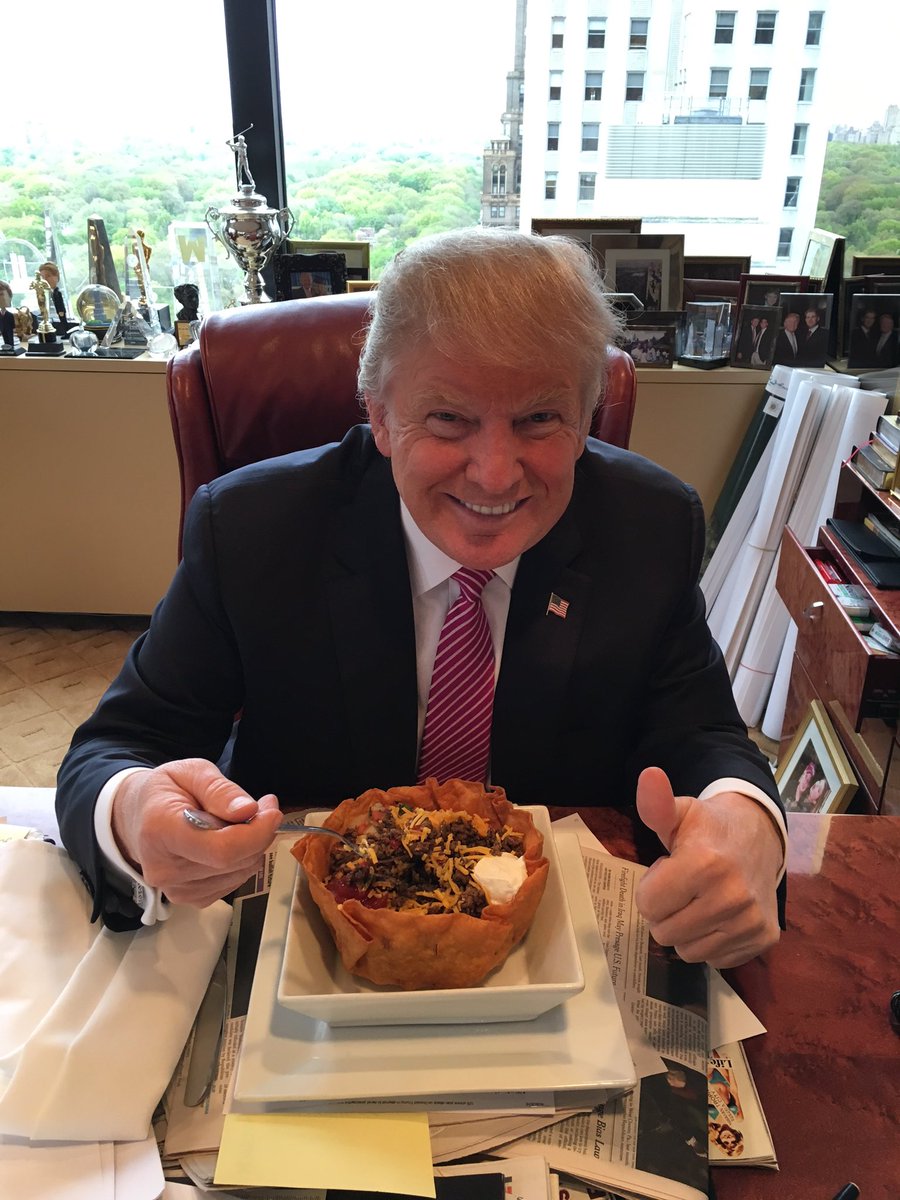
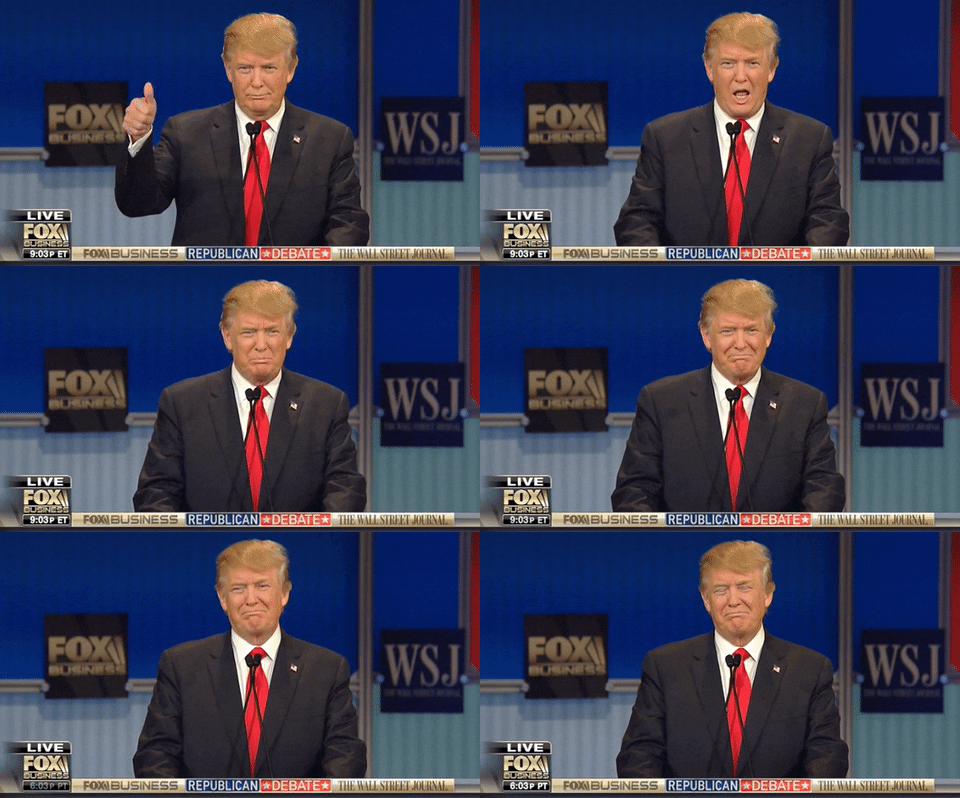
Generally, I was very intrigued and interested by this specific post. Donald Trump over the last year has become either the most hated or loved man in the country so seeing this post about him seemed iconic to me. Mr. Trump posted a photo on the app of Twitter of him eating a taco bowl in his illustrious Trump Tower office. Donald Trump's intention in this post is to relate to the Hispanic community in order to add more votes of that specific minority audience of Hispanics. This type of a appeal is a pathos appeal because he is trying to sort of appeal to the Hispanic culture by feasting "their" type of food. Mr. Trump, being the author, feels content and confident in posting the picture because he feels that with this specific post he will encourage the Hispanic population to follow him in his presidential campaign. Trump also mentions in a hashtag post, "#CincoDeMayo" pertaining more of his attention to the Mexican audience. That's what's most significant about the post, how he is able to purposely, after some rude racist remarks about the Mexican people, attain back that audience he lost by appealing to their culture in that regard.
Image result for donald trump gif


Monday, February 13, 2017

Reflection #3

After writing my final draft, what helped me more than anything was the feedback I received from my peer and from Ms. Reyes. Without their additional comments I wouldn't have been able to further expand and actually find an argument as to what exactly I needed to write about. One major idea or comment in which I took into account was when my peer mentioned, "When did the creators of Twitter realize this concept of 140 characters wasn't a failure?" Taking that into perspective, I was able really get into detail on many of the things that backed up or even doubted what argument I was trying to portray throughout the essay itself. My professor also included great comments and ideas to me by stating, "What did all this research show you? How can you combine what we are learning in class with what you learned?". I went back and rearranged and included a major paragraph into my essay that'll get across what I actually gained out of writing about the topic. In all, this intro essay to the course was relatively very difficult for me to grasp. I considered this sort of a "slap in the face" as to what is in store for this course. I enjoy receiving feedback and valuable comments which help me expand myself as a writer. Self-narrative is relatively new to me, so all I can do is learn from this first essay, and transcend smoothly into the next project coming my way. I can definitely use lots of what I learned in other courses that require for me to research a certain topic. English 1 didn't really prepare me for this semester, but I won't let the lack on proper intro of composition influence my semester this Spring.

Paper #1 History & Cultural Overview of Twitter Final Draft


Jose Mejia
Ms. Reyes
English 1302-65R
2-13-2017
The Positive Refrain of Twitter


Twitter has served as probably, in my opinion over the last three years, as one of the most influential social Medias in the globe. Although it competes daily with Facebook and other related medias, its consistency in evolving and making the app much better than when it began, makes this significant. Self-writing and posting about ourselves is a daily concept now. We tell a narrative of our daily experiences and how they make us feel. Is 140 characters keeping us back? Or is that the point Twitter is trying to do, by keeping us from refraining all the details and sticking to the point?

According to "Mobile: A Brief History of Twitter", Twitter was developed in late March of 2006. It was a ten-person group of individuals in San Francisco who were led by, Evan Williams. Interestingly enough, Williams was a Silicon Valley entrepreneur who also co-founded Blogger in the 1990's. People began using twitter in the same year it was developed, but didn't become notorious to the entire nation until 2007 when it was exposed at an Austin-based SXSW festival. Twitter only allowed and still to this day allows users to say what they want to say in 140 characters or less. Although at first this concept seemed to be a failure, it transcended social networking immensely.

          This research showed me just how self-writing has transcended into our generation. Anderson mentions in his writings on page 213, “Narrative is a discursive schema located within local individual and broader contexts and within culturally driven rules and conventions.” Although this schema has been brought down by past generations, the way we connect now with the topic of “self-writing” has changed. By change, I mean the way we get our voices heard, especially on Twitter has influenced the perception of narrative. Recent readings on “Writing Arguments, A Rhetoric with Readings, Chapter 2,” Ramage, Bean, and Johnsons mention a strategy or concept known as the Believing and Doubting game. We as readers put ourselves in both the actual credibility of whatever that argument may be and oppose as well, doubt. Twitter has been a place where a major part of the world mention their opinions on controversial outbreaks. This all just goes to show how much influence Twitter has had on how narratives will be seen from here until the next development.

How does Twitter work? You basically register for your own profile. After doing that first step, you post updates on your site, add your instant messaging and then conclude with any mobile phone details. Key features that Twitter has and that has added over the years is you can update your Twitter in almost any device. You can follow family, friends and even famous icons. Some of these examples for icons include, celebrities, politicians, athletes, and etc.. News services are also to be provided to users to stay alert on any immediate breaking news information around the globe. Most people use Twitter as a self-writing platform to further get their own story or narrative out. Although it only allows a certain amount of characters, simple one, two, or even three word posts can perceive as a lot. Our culture has evolved and we've become more vocal in social media. Regardless of anything, nobody can tell us how to express ourselves, a huge part of this new generation of social culture is Twitter.

Twitter has led to lots of positives through more than a decade. However, many negative posts and comments between certain individuals have made Twitter a place in which hostilities seem to grow at a large part. The recent President Elect and now our 45th President of the United States, Donald Trump, falls under this hostile group of people who turn to Twitter to get their narrative or story heard. Not all people seem to realize that this is an app opened to pretty much the entire public. Mr. Trump had said a variety of outrageous things throughout his campaign. The most notable comments were actually tweets that he posted on his Twitter profile. Dozens of people around the Nation and around the globe went back to the Presidents tweets from years past. Trump was exposed to millions of Americans on comments of which he had made years ago regarding numerous political situations. The fact that Twitter was the main base for all this activity just shows the evolution and the true impact its social media standard has brought upon the world.


200 million followers and ten years later, Twitter has grown exponentially without a doubt left behind. According to Brian Jenkins from, "A brief history of twitter", the character limitation didn't just serve as the Medias weakness at first, but also became its biggest strength. Jenkins mentions, "The very brief nature of messages on Twitter forced users to become more concise, deft and clever in their communication style." The aspect of this, including the ability of Twitter to let huge personified people communicate directly with users, led to the growth of this. Eventually, Twitter has enabled the people who use it, to become better communicators in the generation we abide with today. 

Image result for twitter images trump gif
Image result for twitter images


New Media Age, "MOBILE: A BRIEF HISTORY OF TWITTER" http://www.centaur.co.uk/, May 17, 2007

Brian Jenkins, "A brief history of twitter", http://acter.metapress.com/home/main.mpx, April 2014

Sunday, February 12, 2017

Reflection #2

I did not receive further feedback from my partner, but with what I was provided by my partner and Ms. Reyes before my second draft post helped me improve my valid argument. I included key points in backing up the history and transcendence of Twitter, but lacked the final argument as to the actual cultural overview of how Twitter influences self-writing. I used more of what my partner mentioned in using a piece from Anderson (Pg. 213) to expand my statement on how the lack of characters is a negative, but as well as a positive in enabling anyone to narrate their daily stories. After writing my second draft, this research showed me abroad at how small details of Twitter can lead to huge innovations within the app. The limit of characters (140) is a key contributor as to how Twitter is so complex within its self-writing contribution to the world.

Saturday, February 11, 2017

Paper #1 Historical & Cultural Overview of Twitter (Revised)

Jose Mejia

English 1302

Ms. Reyes

2-7-2017

Twitter has served as probably, in my opinion over the last three years, as one of the most influential social Medias in the globe. Although it competes daily with Facebook and other related medias, its consistency in evolving and making the app much better than when it began, makes this significant. Self-writing and posting about ourselves is a daily concept now. We tell a narrative of our daily experiences and how they make us feel. Is 140 characters keeping us back? Or is that the point Twitter is trying to do, by keeping us from refraining all the details and sticking to the point?

According to "Mobile: A Brief History of Twitter", Twitter was developed in late March of 2006. It was a ten-person group of individuals in San Francisco who were led by, Evan Williams. Interestingly enough, Williams was a Silicon Valley entrepreneur who also co-founded Blogger in the 1990's. People began using twitter in the same year it was developed, but didn't become notorious to the entire nation until 2007 when it was exposed at an Austin-based SXSW festival. Twitter only allowed and still to this day allows users to say what they want to say in 140 characters or less. Although at first this concept seemed to be a failure, it transcended social networking immensely.

How does Twitter work? You basically register for your own profile. After doing that first step, you post updates on your site, add your instant messaging and then conclude with any mobile phone details. Key features that Twitter has and that has added over the years is you can update your Twitter in almost any device. You can follow family, friends and even famous icons. Some of these examples for icons include, celebrities, politicians, athletes, and etc.. News services are also to be provided to users to stay alert on any immediate breaking news information around the globe. Most people use Twitter as a self-writing platform to further get their own story or narrative out. Although it only allows a certain amount of characters, simple one, two, or even three word posts can perceive as a lot. Our culture has evolved and we've become more vocal in social media. Regardless of anything, nobody can tell us how to express ourselves, a huge part of this new generation of social culture is Twitter.

Twitter has led to lots of positives through more than a decade. However, many negative posts and comments between certain individuals have made Twitter a place in which hostilities seem to grow at a large part. The recent President Elect and now our 45th President of the United States, Donald Trump, falls under this hostile group of people who turn to Twitter to get their narrative or story heard. Not all people seem to realize that this is an app opened to pretty much the entire public. Mr. Trump had said a variety of outrageous things throughout his campaign. The most notable comments were actually tweets that he posted on his Twitter profile. Dozens of people around the Nation and around the globe went back to the Presidents tweets from years past. Trump was exposed to millions of Americans on comments of which he had made years ago regarding numerous political situations. The fact that Twitter was the main base for all this activity just shows the evolution and the true impact its social media standard has brought upon the world.

200 million followers and ten years later, Twitter has grown exponentially without a doubt left behind. According to Brian Jenkins from, "A brief history of twitter", the character limitation didn't just serve as the Medias weakness at first, but also became its biggest strength. Jenkins mentions, "The very brief nature of messages on Twitter forced users to become more concise, deft and clever in their communication style." The aspect of this, including the ability of Twitter to let huge personified people communicate directly with users, led to the growth of this. Eventually, Twitter has enabled the people who use it, to become better communicators in the generation we abide with today.

          This research showed me just how self-writing has transcended into our generation. Anderson mentions in his writings on page 213, “Narrative is a discursive schema located within local individual and broader contexts and within culturally driven rules and conventions.” Although this schema has been brought down by past generations, the way we connect now with the topic of “self-writing” has changed. By change, I mean the way we get our voices heard, especially on Twitter has influenced the perception of narrative. Recent readings on “Writing Arguments, A Rhetoric with Readings, Chapter 2,” Ramage, Bean, and Johnsons mention a strategy or concept known as the Believing and Doubting game. We as readers put ourselves in both the actual credibility of whatever that argument may be and oppose as well, doubt. Twitter has been a place where a major part of the world mention their opinions on controversial outbreaks. This all just goes to show how much influence Twitter has had on how narratives will be seen from here until the next development. 
Image result for twitter imagesImage result for twitter images trump gif


New Media Age, "MOBILE: A BRIEF HISTORY OF TWITTER" http://www.centaur.co.uk/, May 17, 2007


Brian Jenkins, "A brief history of twitter", http://acter.metapress.com/home/main.mpx, April 2014 

Saturday, February 4, 2017

Reflection #1

Reflection #1

I received feedback on my shitty first draft, and the most important concept I need to focus on to transcend my post is to incorporate more precise dates. Also, to include a bit more quotes from any variety of readings or conversations we have had in class. My post includes hard credible and valuable points, but in order to make my post more intriguing I must add more than what I already have. By that means, apply what I already know, but post more important dates and facts that lead to the history of how Twitter was made, expanded and how it stands today. Uploading media images and any sort of visuals would be an elusive add to my post. I mention President Donald Trump and write an argument on him. I’ve learned that I need to back up onto that argument with again, any quotes or specific quotes from any readings I have encountered. 

Wednesday, February 1, 2017

Paper #1 Historical & Cultural Overview of Twitter


Twitter has served as probably, in my opinion over the last three years, as one of the most influential social Medias in the globe. Although it competes daily with Facebook and other related medias, its consistency in evolving and making the app much better than when it began, makes this significant. Self-writing and posting about ourselves is a daily concept now. We tell a narrative of our daily experiences and how they make us feel. Is 140 characters keeping us back? Or is that the point Twitter is trying to do, by keeping us from refraining all the details and sticking to the point?

According to "Mobile: A Brief History of Twitter", Twitter was developed in late March of 2006. It was a ten-person group of individuals in San Francisco who were led by, Evan Williams. Interestingly enough, Williams was a Silicon Valley entrepreneur who also co-founded Blogger in the 1990's. People began using twitter in the same year it was developed, but didn't become notorious to the entire nation until 2007 when it was exposed at an Austin-based SXSW festival. Twitter only allowed and still to this day allows users to say what they want to say in 140 characters or less. Although at first this concept seemed to be a failure, it transcended social networking immensely.

How does Twitter work? You basically register for your own profile. After doing that first step, you post updates on your site, add your instant messaging and then conclude with any mobile phone details. Key features that Twitter has and that has added over the years is you can update your Twitter in almost any device. You can follow family, friends and even famous icons. Some of these examples for icons include, celebrities, politicians, athletes, and etc.. News services are also to be provided to users to stay alert on any immediate breaking news information around the globe. Most people use Twitter as a self-writing platform to further get their own story or narrative out. Although it only allows a certain amount of characters, simple one, two, or even three word posts can perceive as a lot. Our culture has evolved and we've become more vocal in social media. Regardless of anything, nobody can tell us how to express ourselves, a huge part of this new generation of social culture is Twitter.

Twitter has led to lots of positives through more than a decade. However, many negative posts and comments between certain individuals have made Twitter a place in which hostilities seem to grow at a large part. The recent President Elect and now our 45th President of the United States, Donald Trump, falls under this hostile group of people who turn to Twitter to get their narrative or story heard. Not all people seem to realize that this is an app opened to pretty much the entire public. Mr. Trump had said a variety of outrageous things throughout his campaign. The most notable comments were actually tweets that he posted on his Twitter profile. Dozens of people around the Nation and around the globe went back to the Presidents tweets from years past. Trump was exposed to millions of Americans on comments of which he had made years ago regarding numerous political situations. The fact that Twitter was the main base for all this activity just shows the evolution and the true impact its social media standard has brought upon the world.

200 million followers and ten years later, Twitter has grown exponentially without a doubt left behind. According to Brian Jenkins from, "A brief history of twitter", the character limitation didn't just serve as the Medias weakness at first, but also became its biggest strength. Jenkins mentions, "The very brief nature of messages on Twitter forced users to become more concise, deft and clever in their communication style." The aspect of this, including the ability of Twitter to let huge personified people communicate directly with users, led to the growth of this. Eventually, Twitter has enabled the people who use it, to become better communicators in the generation we abide with today.

          This research showed me just how self-writing has transcended into our generation. Anderson mentions in his writings on page 213, “Narrative is a discursive schema located within local individual and broader contexts and within culturally driven rules and conventions.” Although this schema has been brought down by past generations, the way we connect now with the topic of “self-writing” has changed. By change, I mean the way we get our voices heard, especially on Twitter has influenced the perception of narrative. Recent readings on “Writing Arguments, A Rhetoric with Readings, Chapter 2,” Ramage, Bean, and Johnsons mention a strategy or concept known as the Believing and Doubting game. We as readers put ourselves in both the actual credibility of whatever that argument may be and oppose as well, doubt. Twitter has been a place where a major part of the world mention their opinions on controversial outbreaks. This all just goes to show how much influence Twitter has had on how narratives will be seen from here until the next development.


New Media Age, "MOBILE: A BRIEF HISTORY OF TWITTER" http://www.centaur.co.uk/, May 17, 2007

Brian Jenkins, "A brief history of twitter", http://acter.metapress.com/home/main.mpx, April 2014